Tea Grades and Leaf Codes
Two tins from the same brand, same weight — and the tea tastes different. The reason is usually leaf size.
In our store we call it "tea grade": coarse, fine, granules, or whole leaf. The global tea trade uses different names for the same thing. This guide explains both.
Why does leaf size change the taste?
Smaller pieces have more surface touching the water. That means:
Small pieces: fast colour, strong taste, and bitterness if you steep too long.
Large pieces: slower colour, softer taste, and they handle long steeping.
The four grades
Whole leaf
The leaf is unbroken, made the traditional way known as orthodox processing.
Taste: softer, clearer aroma, less bitterness.
Best for: drinking without sugar, and special hospitality.
Coarse
Medium broken leaf.
Taste: dark colour and clear strength, holds up over time.
Best for: samovar and large pots.
Fine
Very fine leaf — the kind normally used inside tea bags.
Taste: dark colour within minutes.
Best for: the quick daily cup.
Granules
Made by the CTC method — Crush, Tear, Curl. The leaves pass through rollers with serrated blades and come out as even pellets.
Taste: heavy and strong, stands up to milk.
Best for: karak and milk tea.
The codes on the tin: what do they mean?
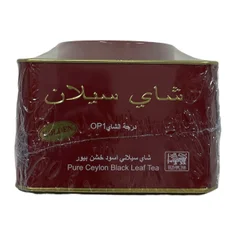
Some tins carry letters like OP, BOP or BOPF. These are not brand names — they are trade codes describing leaf size and appearance.
Before you read them, know their limits: these codes are not a unified standard. Each factory grades its own crop, so one factory's OP may not match another's. Read them as an approximate description, not a guarantee.
They are used mainly for teas from Sri Lanka, India and neighbouring origins, and are not generally known in China.
Where do the two words come from?
Pekoe: most likely from a Chinese word in the Xiamen dialect meaning "white down", referring to the fine white hairs on young buds. The origin is not fully settled.
Orange: nothing to do with the fruit or its flavour. The best-known explanation traces it to the Dutch royal House of Orange; another suggests it describes the coppery colour of processed leaf. It remains unsettled.
The letters
B — Broken
G — Golden: contains golden buds
T — Tippy: a high proportion of buds
F: means Flowery, Fine or Fannings, depending on its position in the code
Whole leaf codes
Code
Meaning
OP
Orange Pekoe — the standard whole leaf grade
FOP
Flowery Orange Pekoe — whole leaves with buds
GFOP
Golden Flowery Orange Pekoe — a higher proportion of golden buds
TGFOP
Tippy Golden Flowery Orange Pekoe — the highest bud content
FTGFOP
Finest Tippy Golden Flowery Orange Pekoe — among the top grades
Broken and fine codes
Code
Meaning
BOP
Broken Orange Pekoe — the main broken grade
BOPF
Broken Orange Pekoe Fannings — fine, common in Ceylon and Kenya
PD
Pekoe Dust — very fine
Dust
The finest particles
CTC
Granules — no whole leaf grade exists at all
A number 1 after the letters — as in TGFOP1 or D1 — usually indicates a higher grade within the same class.
Worth knowing about most tea on the market: BOPF is among the main grades produced in Ceylon, Kenya, southern India and Indonesia.
Important: grade is not quality
Many people assume whole leaf always means better tea. That is not accurate. The grading system describes leaf size only, not what the cup tastes like. Excellent broken-leaf teas exist, and ordinary whole-leaf teas exist too.
The right rule: choose the grade that matches how you brew, not the one with the fanciest name.
How much tea?
The international standard ISO 3103 specifies 2 grams of tea per 100 ml of water, with a six-minute brew for black tea.
That is a laboratory tasting standard, but it is a good starting point. For daily use:
200 ml cup: 2 to 4 grams.
One litre: 8 to 10 grams.
Fine grade: cut the time to about 3 minutes.
Choose in one line
Your method
Grade to pick
Samovar or large pot
Coarse
Quick daily cup
Fine
Karak or milk tea
Granules
No sugar
Whole leaf
Office or travel
Tea bags
FAQ
Is fine tea stronger than coarse?
Not stronger — faster. It releases colour in minutes, while coarse tea needs longer but tolerates it.
Why does my tea turn bitter?
The steeping time is too long for that leaf size. Shorten the time before you change the tea.
What does Orange Pekoe mean?
Nothing to do with oranges or orange flavour. It is a trade term describing leaf size and appearance.
Are the codes guaranteed?
No. There is no unified standard binding factories, and each one grades its own crop. The code gives you an idea of leaf size, nothing more.
Sources
ISO 3103 — International Organization for Standardization, method for preparing tea liquor for sensory tests.
Tea leaf grading — the OP, BOP, BOPF, fannings and dust codes, and the origins of the words Pekoe and Orange.
Crush, Tear, Curl (CTC) — description of the mechanical granulation process.